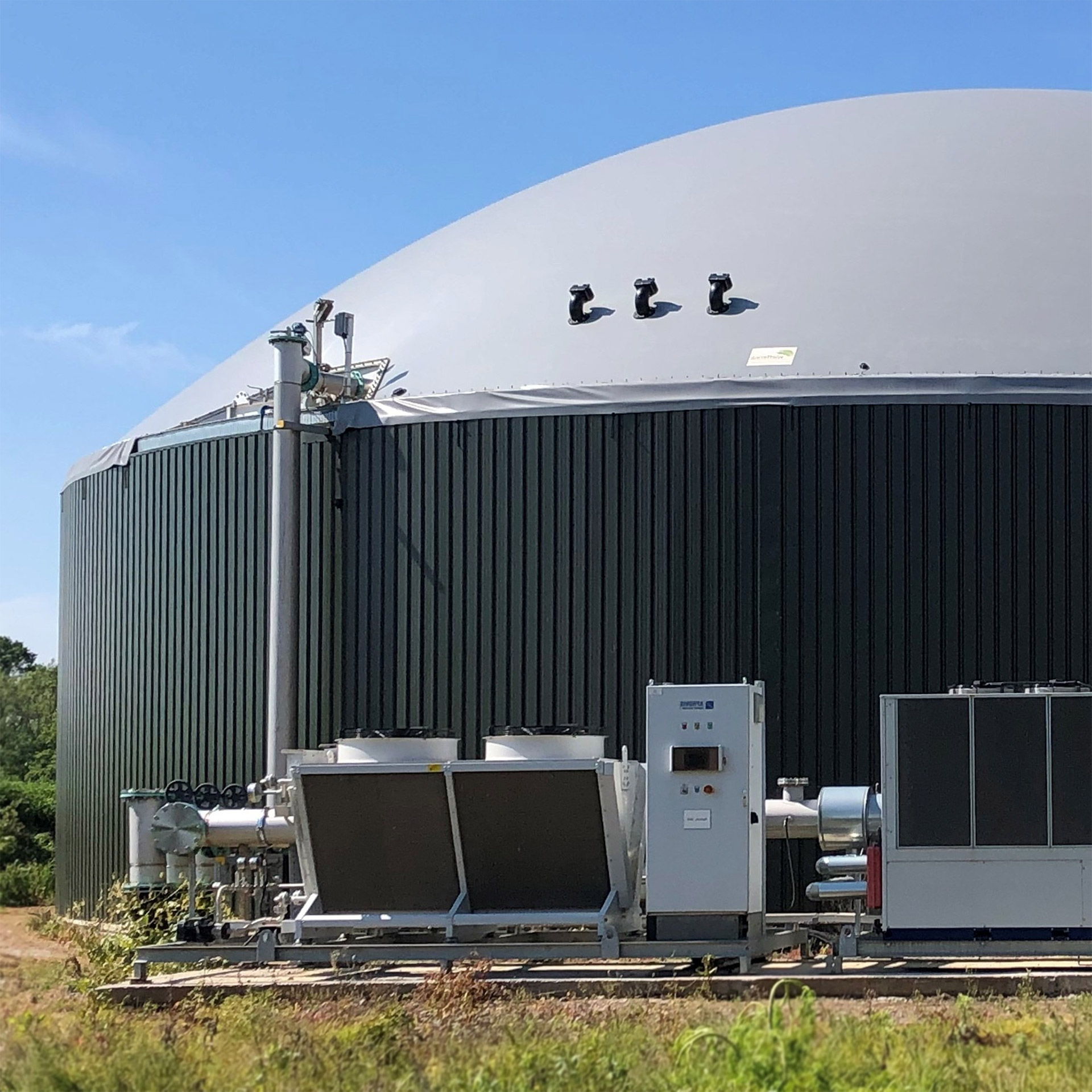

Biogas: A Renewable Fuel
What is Biogas?
Biogas is a renewable energy source produced by the decomposition of organic matter—such as food scraps and animal waste—in an oxygen-free environment. This process is known as anaerobic digestion.
How is Biogas Produced?
- Organic Waste Input: Food waste, manure, and other biodegradable materials are placed in an airtight container known as a digestor.
- Anaerobic Digestion: Microorganisms break down the organic matter through multiple stages.
- Gas Formation: The process results in the production of biogas, primarily composed of:
- Methane (CH₄): 45% – 75%
- Carbon Dioxide (CO₂): The remainder
The leftover solid and liquid material, called digestate, is nutrient-rich and can be used as fertilizer.
Uses of Biogas
- Electricity Generation
- Heat Production
- Upgraded to Biomethane: Can be used as a vehicle fuel or injected into the natural gas grid
Benefits of Biogas
- Waste Management: Offers an eco-friendly way to treat organic waste
- Renewable Energy Source: Reduces reliance on fossil fuels
- Soil Fertility: Digestate serves as a natural fertilizer
- Environmental Protection: Lowers greenhouse gas emissions by capturing methane
Contact Us
Get in touch using the form below.